
5 Ways to Spot a Fake Copeland Scroll Compressor (Don’t Get Scammed!)
Introduction:
You are quoting a cold room project. You find a supplier offering a Copeland ZB45 for 20% less than the market price. Is it a bargain? Probably not. It’s likely a “time bomb” waiting to destroy your reputation.
In the refrigeration market, refurbished (second-hand) compressors are often sandblasted, repainted, and sold as “Brand New.” These units might run for a month, but they will eventually fail, costing you thousands in spoiled food and emergency repairs.
At PENPOS, we only supply 100% Original Brand New compressors. Today, our engineers will teach you how to spot a fake in 5 minutes.
1. The “Nitrogen Pressure” Test (The Easiest Way)
Every brand new Copeland or Danfoss compressor leaves the factory filled with dry nitrogen (positive pressure) to prevent moisture from entering.
How to check: When you pull out the rubber plug from the suction or discharge port, you should hear a distinct “Pfffffft” sound.
-
Original: Strong release of gas sound.
-
Fake/Refurbished: No sound, or very weak. This means the seal was broken long ago, and moisture has likely rusted the internal motor.

2. Check the Wiring Terminals (The “Fingerprint”)
Refurbishers can repaint the outside, but they often forget to change the terminal box details.
How to check: Open the black terminal cover box on the top. Look at the screw terminals (the metal posts where you connect wires).
-
Original: The nuts and metal posts are shiny, clean, and have no scratch marks.
-
Fake/Refurbished: Look for circular scratch marks around the nuts. This shows that wires were previously connected and then removed. If the nuts look rusty or dirty, reject it immediately.
3. The Paint and Welding Quality
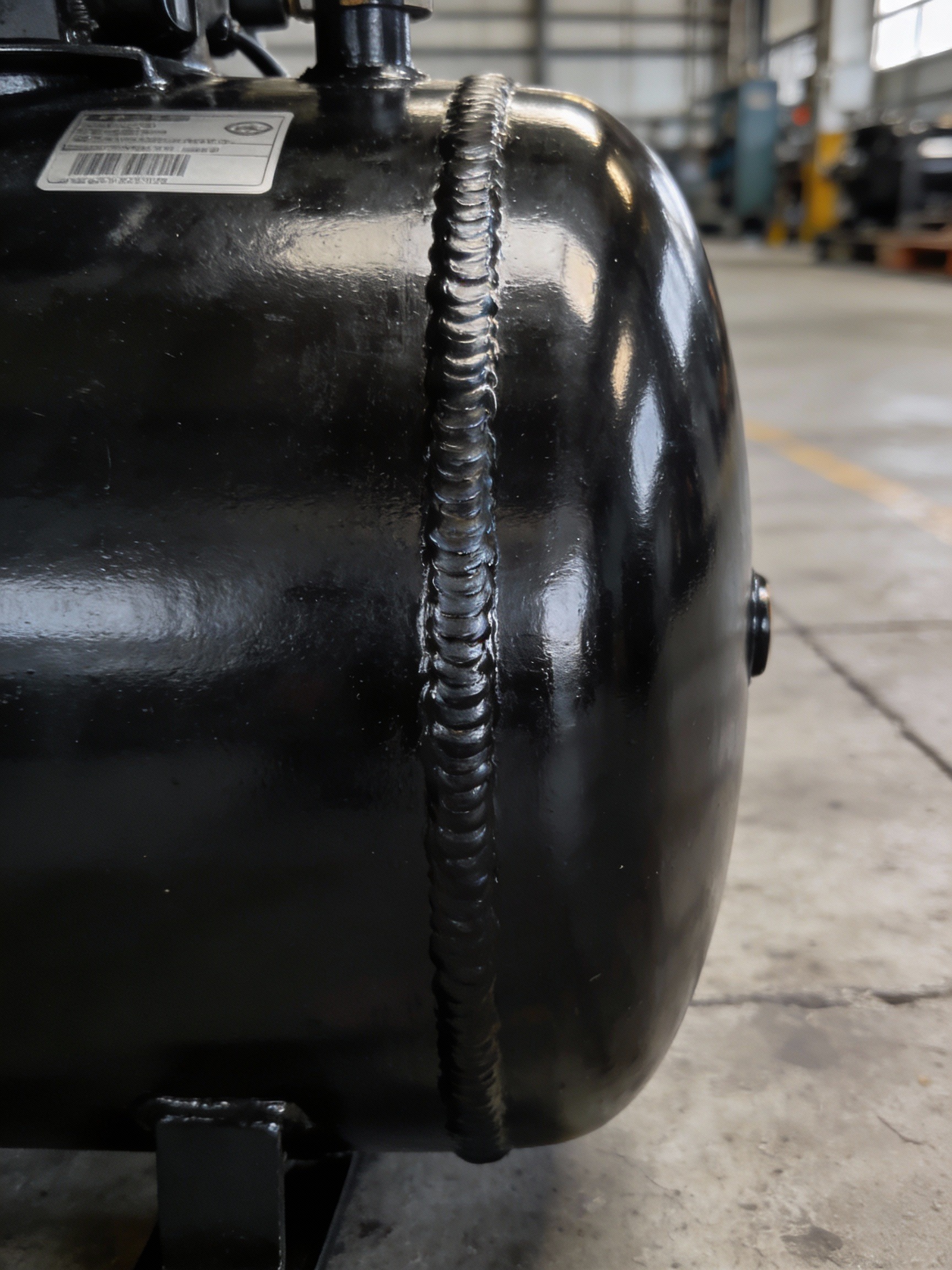
Original manufacturers use robotic welding and industrial powder coating. Small workshops use manual welding and cheap spray paint.
How to check:
-
Peeling Paint: Scratch the paint with your fingernail or a coin. If it peels off easily and reveals another color (or rust) underneath, it’s a repainted unit.
-
Welding Seams: Look at the weld line running down the side of the compressor. Original welds are perfectly smooth and uniform. Refurbished units often have messy, uneven hand-welding marks where they cut the shell open to repair it.
4. Verify the Serial Number
Every genuine compressor has an ID card. For Copeland, you can often track the manufacturing date via the serial number.
How to check: Look at the silver nameplate.
-
Scan the QR Code: Most new models have a QR code. Scan it with your phone. It should take you to the Emerson/Copeland app or data.
-
Font Quality: Original nameplates have sharp, clear text. Fake nameplates often look blurry, or the ink rubs off easily.
5. The Price Trap
The most obvious sign is the price. If the official wholesale price of a model is $500, and someone offers it to you for $350, it is not a discount. It is a trap.
There is no “secret channel” that gets 30% off factory cost. Cheap compressors usually mean they are mixed with used parts or fake oil.
Conclusion: Don’t Risk Your Business
Saving $50 on a compressor is not worth risking a $50,000 cold room project. As a professional contractor, your reputation depends on reliability.
At PENPOS, we invite you to video call us. We will show you our warehouse, open the box, and let you hear the “Nitrogen Sound” yourself before we ship.
Need a quote for 100% Original Compressors? [ Chat with our Engineer on WhatsApp ] [ View Our Copeland Catalog ]


